Blog·
What a lot line adjustment is, and why it shows up before a quiet assembly
A lot line adjustment is a small recorder's-office filing. Here's why it's often the first paper trail a developer leaves before a parcel assembly goes public.
A lot line adjustment moves a boundary between two or more parcels that are already under common or related ownership. No new lot gets created. No subdivision review gets triggered. The county just re-records where the line sits, usually to square up an odd jog, absorb a sliver, or make an undersized remainder parcel conforming again. Most jurisdictions treat it as ministerial, meaning it clears planning staff without a hearing, sometimes without a public notice of any kind.
That administrative quietness is exactly why it matters to anyone watching a target area for assembly activity. A rezoning or a formal subdivision plat announces itself. A lot line adjustment doesn't. It's the paperwork equivalent of someone tidying up a property line in the back office while the parcels out front still look like nothing is happening.
What the filing actually changes on the ground
An LLA typically does one of a few things: it eliminates a landlocked remainder, it reshapes a parcel so a future building envelope clears setbacks, or it consolidates frontage so a single access point serves what used to be two separate curb cuts. None of these require the buyer to disclose intent. A developer who has picked up three adjoining parcels through separate LLCs over eighteen months can file adjustments that make the group function as one buildable site, years before any site plan gets submitted to planning and zoning.
For a land-development analyst, the filing itself is a secondary signal at best. County recorder databases are inconsistent about how LLAs get indexed, and a lot of staff simply won't flag one unless you're pulling plat records parcel by parcel. The adjustment is real evidence that boundaries are being prepared for something, but by the time you've found it in the record, the groundwork may already be a year old.
Why the ground usually moves first
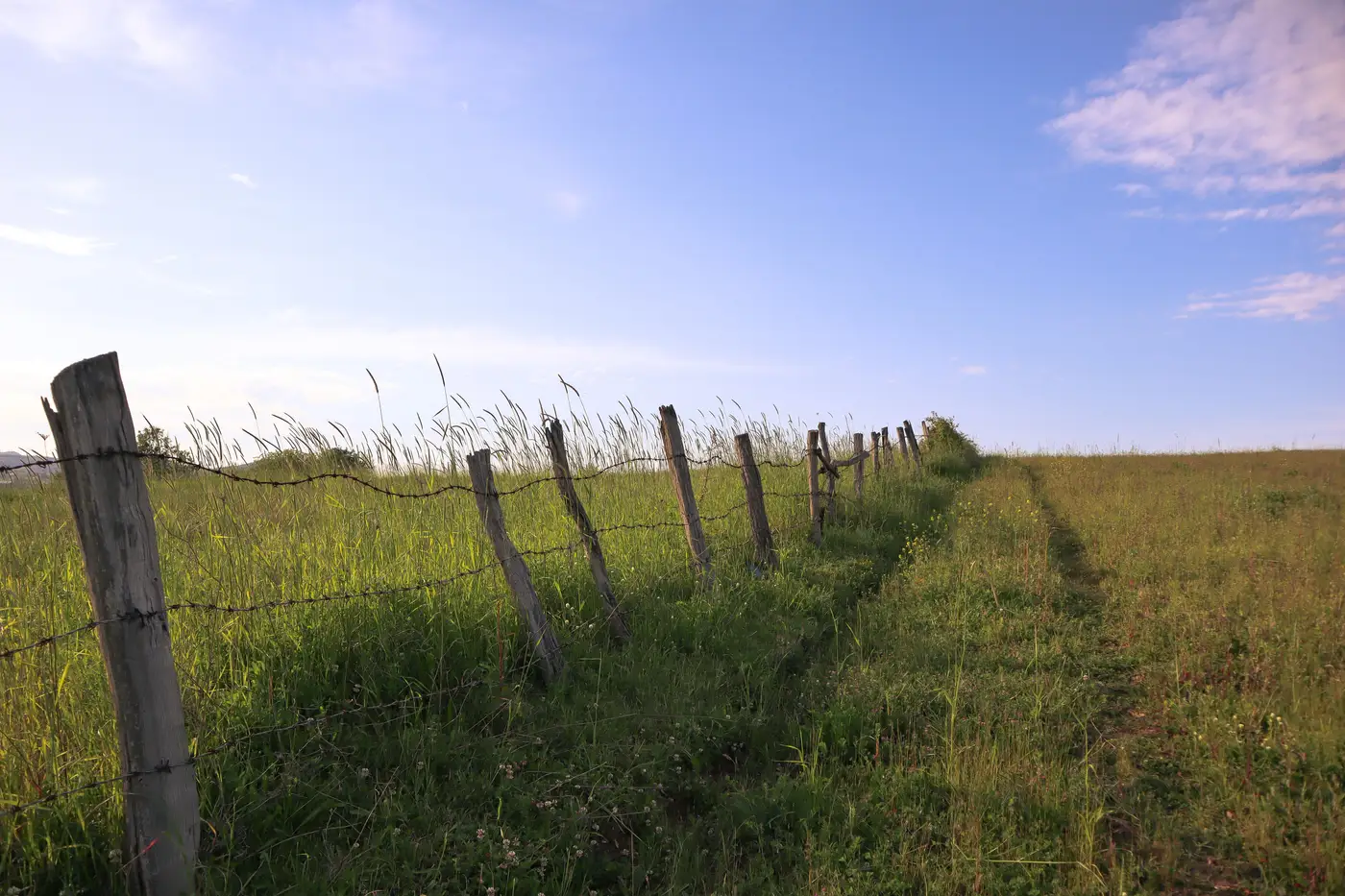
This is where the LLA stops being the leading indicator and the parcel itself becomes one. Once boundaries are cleaned up on paper, the physical site tends to follow. Brush gets cleared off the new parcel lines. A chain-link or wood fence goes up around the combined perimeter.
Mowing starts on ground that used to sit scrubby and unattended. That maintenance pattern, not any visible construction, is the tell: the site is being held in a stable, presentable, fenced-off state while title work, entitlements, or a partner search happens out of public view.
That quiet-hold condition, cleared, fenced, mown, and conspicuously unbuilt, shows up on a satellite pass well before any recorder's filing surfaces in a routine title search. A parcel that was scrubby and ignored for three straight quarterly passes and then turns up clean and fenced on the fourth is behaving exactly like ground that just went through a lot line adjustment, whether or not the paperwork has been indexed anywhere you can find it yet.
Reading a boundary change against the land
The two pieces of evidence work best together. A recorded LLA tells you a boundary moved. A quarterly look at the parcel tells you whether the ground is being prepared to match. An analyst who checks both isn't waiting on a title company to flag a filing buried in county records months after it happened. A quarterly parcel-pattern report built around that quiet-hold signature gives the same read on an entire watched area at once: which parcels went from scrubby to cleared and fenced, and since which pass.
A lot line adjustment is boring by design. That's the whole point of using it as a tell. Assembly that announces itself with a rezoning hearing has already lost the element of surprise. Assembly that moves through LLAs and quiet site maintenance is still trying to stay invisible, which makes the parcel itself, not the recorder's index, the thing worth watching.
If a parcel in your area has gone quiet and tidy for no announced reason, that's worth a closer look before the owner wants anyone asking.